 First Steps
Ginger
Does Ginger Help Sore Joints? Why an Old Kitchen Root Keeps Coming Up in Joint Conversations
Your sister swears by ginger tea. The neighbor grates it into everything. Meanwhile your knees still wake you at night, so you ask the fair question: can a root from the kitchen really matter to a joint?
By the First Steps Journal editorial team · Updated · 4 min read
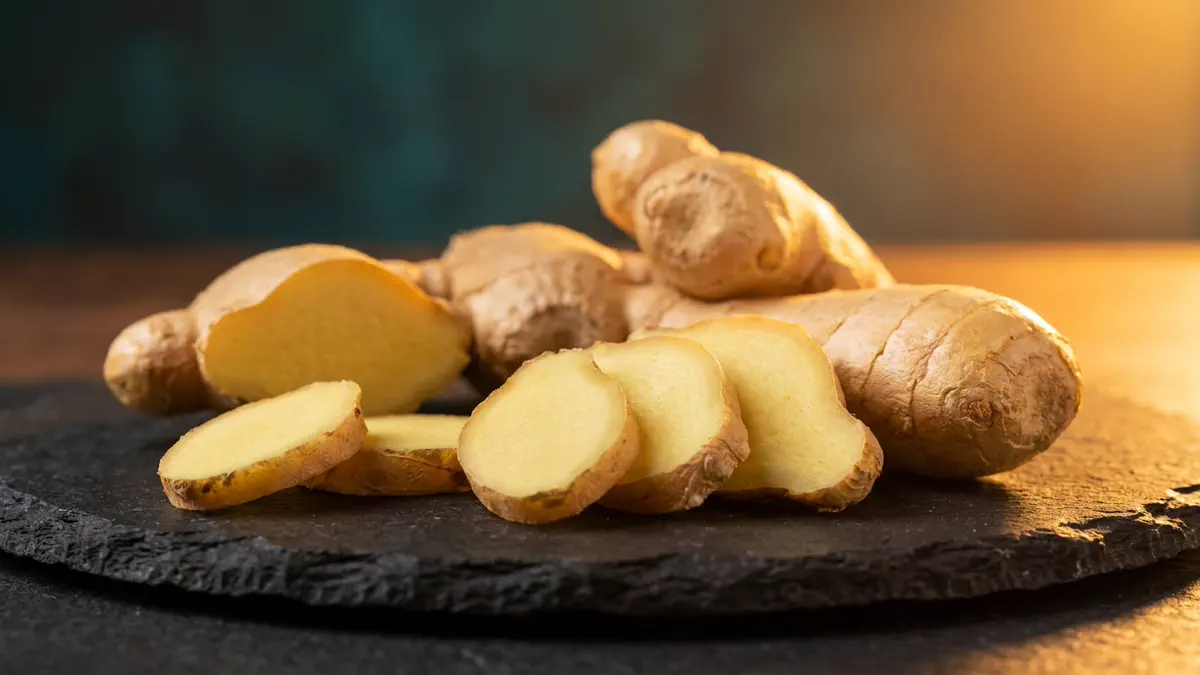
Why ginger keeps coming up
Ginger is one of those foods that people reach for when something aches. Cooks have used it for centuries, from Asian kitchens to Grandma’s gingerbread, and traditional remedies lean on it for sore, stiff joints. When you ask at church or at the pharmacy counter what helps, someone is always going to say ginger.
The sharp, warm bite in fresh ginger comes mostly from compounds called gingerols. The best known of them is 6-gingerol, and it is the one that comes up again and again when the conversation turns to joints.
Ginger tea, the grated root and the jar of powder
Most people start with the easy versions. A mug of ginger tea in the evening. A little grated root in the soup. A spoonful of the dry powder from the spice rack. They are pleasant habits, and plenty of people stick with them for years.
The honest limit is amount. A cup of tea made from a thin slice of root carries only a little of what is in the plant, and the powder in an old jar has lost much of its punch. People who want more than a pleasant routine tend to look for a concentrated form.
The Okinawa part of the story
This is where the presentation behind ArtiBrex comes in. Its hook is the Japanese Cocktail, a morning ritual, and its setting is Okinawa, an island the video holds up as proof that aging does not have to look the way we expect. It says the ginger grown there, in volcanic soil and prepared by a traditional method, is a richer source of 6-gingerol than ordinary ginger from a store.
Those are the presentation’s claims about its own ginger, and they are the reason the formula starts there. It treats 6-gingerol as the star of the formula and the engine of what it calls the Joint Reset.
Fresh, powdered, tea or capsule
Each form has its own character. Fresh root has the most bite and is lovely grated into soup. Dried powder is milder and easy to stir into oatmeal, but it fades on the shelf. Tea is the gentlest, a warm cup that is as much a ritual as anything else. And a capsule is the most measured: the same amount, the same way, whether or not you remembered to buy fresh root.
Which one suits you depends on what you want from it. A habit you enjoy is worth keeping, and a routine you can repeat on a tired morning is worth even more.
Why ginger is only one of four
The presentation does not stop at ginger. It builds the formula around four components working together:
- Okinawan ginger, for its 6-gingerol;
- protected B vitamins, which it says replace the reserves a hidden toxin takes away;
- undenatured type II collagen, the type found in cartilage;
- Boswellia serrata, a tree resin used for centuries.
Its reasoning is the leaky bucket. A single ingredient, it says, is water poured into a bucket with holes, and the pieces only add up when they are taken together.
What people want ginger to do for them
No one drinks ginger tea for the taste alone. They drink it hoping the first steps of the morning will be easier, the stairs will feel more solid and the knees will let them sleep. Those are the changes the presentation describes in the same terms, as a simple routine rather than a project.
Its pitch is that nothing in your day has to be given up for it, and its own timeline is measured in weeks, with a first change coming early. Take that as the presentation’s description; every body is different.
How people fit it into a day
Many start with a mug of ginger tea, and add lemon on the days the throat needs it. Some grate a little root into their breakfast eggs or oatmeal. Others keep a jar of thin slices steeping in hot water on the counter. None of it is complicated, and all of it feels good on a cold morning.
The trouble, for most people, is not the ginger. It is the consistency. A habit that depends on shopping, peeling and measuring is easy to drop on the very mornings you need it most.
Bringing ginger into the morning
There is no harm in keeping the tea and the grated root. They make a nice start to the day. What the presentation offers on top is a capsule built around ginger from Okinawa, so the morning ritual does not depend on what is left in the spice jar. ArtiBrex is that capsule.
Frequently asked questions
Is ginger good for joints?
Ginger has a long history in kitchens and traditional remedies, and people often reach for it when their joints are sore. The presentation behind ArtiBrex builds its formula around a ginger compound, 6-gingerol.
What is 6-gingerol?
It is one of the gingerols that give fresh ginger its sharp bite, and the presentation treats it as the star ingredient of its formula.
Is ginger tea enough?
Ginger tea is a pleasant habit, but a cup carries only a little of the root. People who want more look at a concentrated form, which is what the presentation’s formula is built on.
Does ginger mix with my medication?
Ginger is a food, but anything you take regularly belongs on the list you share with your doctor and pharmacist, especially if you take a blood thinner.
Keep reading
 Boswellia
 for Joints: The Tree Resin People Ask About
What Boswellia is, why it keeps showing up in joint conversations, and why it is one of four partners rather than a lone hero.4 min read Collagen
Type II Collagen for Joints: What It Is and Where It Fits
What type II collagen is, what “undenatured” means in plain words, and why the presentation pairs it with ginger, B vitamins and Boswellia.4 min readThis article is general information, not medical advice, and it doesn’t replace a conversation with your doctor or pharmacist. Last updated November 12, 2026. Spotted an error? Write to support@artibrex.blog.