 First Steps
Wear and tear
Told It Is Wear and Tear and to Live With It? Why That Answer Leaves You Right Where You Started
You finally mention the pain at a checkup, and the answer takes under a minute: it is wear and tear, at your age, learn to live with it. You nod. You pay at the front desk. You drive home carrying every bit of it, plus the thought that nobody is going to do anything.
By the First Steps Journal editorial team · Updated · 4 min read

What you heard in that exam room
You rehearsed in the car. You listed the stairs, the nights, the way your hands feel at breakfast. The doctor looked at a screen, nodded, said it was normal for your age and that there was not much to do besides managing it. There was a prescription for pain, maybe a brochure, a follow-up in six months.
That was never an insult. The appointment was short, and the sentence was true as far as it went. But you came for a plan and left with a shrug in a polite voice.
What “wear and tear” gets right
Fair is fair. Joints do change over a lifetime. Decades of kneeling, lifting, running and carrying leave their marks, and age is a real part of the picture. Nobody serious pretends otherwise.
The trouble is what the phrase quietly asks you to believe next: that because it is common, it is final, and that your only job is to put up with it.
What it leaves out
- It does not explain why some mornings are far worse than others.
- It does not explain why a friend of the same age takes the stairs without a thought.
- It does not explain why the pills, the creams and the therapy brought only a little relief, or none.
- It has nothing to say about the nights, the fear of falling or the grandchild you cannot lift.
A sentence that explains none of that is not a diagnosis of your life. It is a closing remark.
Why this answer is so easy to accept
Part of it is the setting. A doctor with a full waiting room has a few minutes, and “it’s your age” is a short sentence that is hard to argue with. Part of it is us. We were raised not to make a fuss, and we do not want to be the patient who complains about something everyone has.
Family adds its voice. “Well, at our age,” says a friend, and it becomes a little club of people who agree to stop asking. Nobody means any harm. But a conclusion that everyone repeats is not the same as a conclusion that has been checked against your own life.
The price of living with it
Nobody announces the day they stop. They simply stop kneeling in church, because getting up is a project. They stop going to the garden, because the knees will not forgive the bending. They skip the long weekend with the family, and they stop telling anyone why. The life gets smaller so slowly that it can feel like your own choice.
It is worth saying out loud that “learning to live with it” has a cost, and that you are the one paying it.
The argument the presentation makes instead
The presentation behind ArtiBrex takes “wear and tear” head on. Its claim is that years and use are not what ruin joints. The culprit, it says, is a hidden toxin that stops vitamins from being absorbed; the body then overproduces an enzyme the video nicknames “acid for your joints,” and inflammatory crystals are the residue.
It adds an image meant to explain why nothing has worked: a bucket full of holes. Whatever you pour in, from vitamins to pills, leaks out before it can act. If that is right, the problem was never that you did not try hard enough, only that you were pouring into the wrong bucket. Those are the presentation’s claims, offered as its explanation.
A fair question to ask yourself
When you hear “learn to live with it,” ask what exactly you are being told to live with. The first steps out of bed? The stairs? The nights? The grandchild you cannot lift? Be as specific as you can, then ask whether any of those is something you are truly willing to accept for the next ten years. For most people the honest answer is no, and that answer is a good place to begin.
Asking for more than a shrug
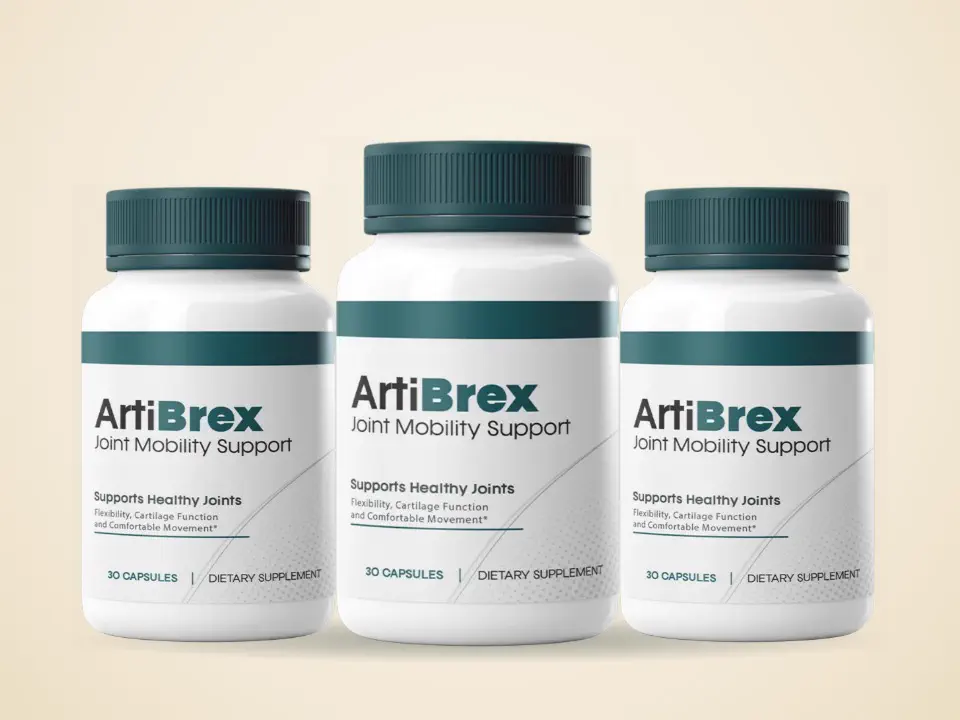
You are allowed to want a better answer than “learn to live with it.” The presentation’s own proposal is a morning routine in capsule form, ArtiBrex, which it says needs no special diet, no workouts and no painful treatments. Whatever you decide, you can decide it knowing there is another argument on the table, and that it was made for someone who is not ready to shrink their life.
Frequently asked questions
What does “wear and tear” mean for joints?
It is the general explanation that years of use change the joints. It is common and accurate as far as it goes, but it does not tell you what to do about the pain.
Do I really have to learn to live with joint pain?
That is the standard advice, and you can question it. The presentation behind ArtiBrex argues that joint pain is not simply age or wear and describes a different approach.
Why doesn’t the usual treatment seem to work for me?
The presentation’s answer is its leaky bucket: it says vitamins never get properly absorbed, so what you take leaks away early. That is its explanation, offered as a claim.
What is the other explanation people are asking about?
A toxin, then joint acid, then crystals: a chain the presentation says starts upstream. It calls its answer the Joint Reset, built into a capsule called ArtiBrex.
Keep reading
 Nothing worked
You Did Everything Right and Your Joints Still Got Worse
Why the diet, the pills and the therapy can leave you worse off, and the leaky bucket picture the presentation uses to explain it.4 min readDoctor visitJoint Pain Checkup: Questions to Bring to Your Doctor
A short page of questions for your doctor about joint pain, what to describe, and how to bring in what you have seen elsewhere.4 min readThis article is general information, not medical advice, and it doesn’t replace a conversation with your doctor or pharmacist. Last updated November 12, 2026. Spotted an error? Write to support@artibrex.blog.