 First Steps
Nights
Awake at 2 a.m. With a Throbbing Ache: How Joint Pain Steals Your Sleep
The clock says 2:10. Then 3:40. Then 5:05. Your knee throbs with your pulse, you shift the pillow between your legs, and you wonder how you will get through tomorrow on this little sleep. You are not imagining it, and you are not alone in the dark.
By the First Steps Journal editorial team · Updated · 4 min read
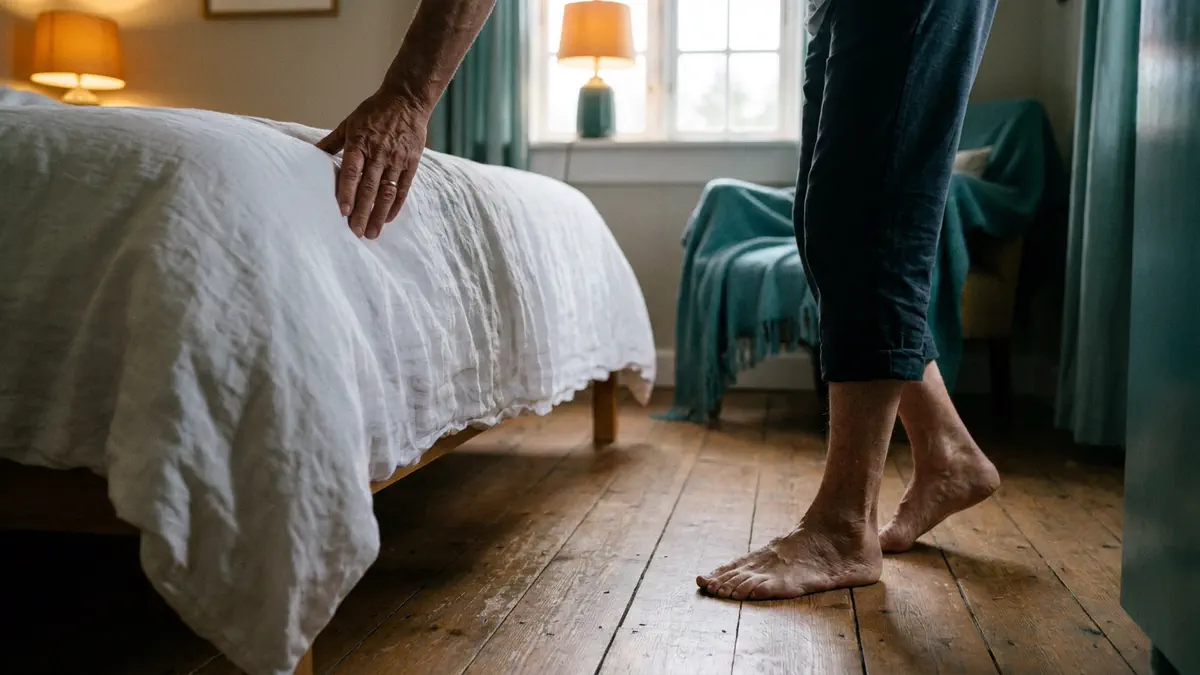
The nights nobody talks about
At 2:10 you settle the pillow between your knees and finally drift. At 3:40 the ache wakes you again, a slow throb that moves with your pulse. At 5:05 you give up, lie there and listen to the house. Five or six times a night, you pay for the day you just had, and then you get up and pay for the one ahead.
By afternoon the missing sleep shows. You are short with the people you love. You nod off in the chair after lunch, and then you wonder what that means. Nobody sees any of it from the outside. They see a person who looks a little tired.
Why the ache seems louder after dark
Part of it is the quiet. During the day there are conversations, errands and the television to share your attention. At night there is only the throb. Lying still for hours also lets joints stiffen, so a small turn in bed can send a jolt through a hip or a knee. Many people describe the same pattern: comfortable at nine, aching at two.
Pain and sleep also feed each other. A tired body feels pain more sharply, and a body in pain sleeps badly. That loop is hard to break from either end.
“It’s not insomnia, it’s my joint”
If you have been offered sleep tips, a new mattress or something for insomnia, you may have felt the mismatch. You do not have trouble falling asleep. You have trouble staying there, because something in your leg wakes you. People in your position tend to say it just that way: it is not insomnia, it is the joint.
That distinction matters, because it moves the question from “how do I sleep?” to “what is waking me?”
What people try at three in the morning
- A pillow between the knees when side-sleeping, or under them when lying on the back.
- A heating pad, or a warm shower right before bed.
- An over-the-counter pain reliever, taken a little later than they would like.
- A slow walk down the hall to shake the stiffness out.
- The television on low, for company more than for the show.
These help a little, and they are worth keeping. If you find yourself reaching for a pain reliever just to sleep several nights a week, let your doctor know.
A gentler bedtime
A few small habits stack up over a week. Keep the bedroom a little cool. Wind down with warmth, not a screen. Keep a regular time for bed and for getting up. Leave a glass of water and a night light where you can find them. None of this switches the ache off, but it can leave you with fewer, shorter wake-ups to deal with.
What to tell the people you live with
Your spouse probably knows you are awake, and may not know how often. Tell them. It is easier for a partner to be patient with a short temper at breakfast when they understand the night behind it. And if one of you has started sleeping in the guest room to protect the other’s rest, say so out loud, so that it does not turn into distance.
The afternoon matters as well. Caffeine after lunch, a long nap and a heavy late supper can each make the night harder. A short walk in daylight, a lighter dinner and a regular bedtime help the body settle before the throb starts.
What the presentation says about the ache
The presentation behind ArtiBrex says the ache you feel at night is not just age, and not just the hours spent lying still. In its account, the trouble starts with a hidden toxin and a vitamin shortage, and the joint ends up bathed in what it calls acid and dotted with crystals. It uses that picture to explain why the pain follows you into bed.
Whether you take the whole explanation or not, it points to a goal that is easy to state: the joint, not you, is the thing to work on.
Sleeping through until the alarm
The ritual the presentation describes is a morning one, built around Okinawan ginger, but the picture it paints is of the night: sleeping all the way through, waking rested and not bracing for the first step. ArtiBrex is the capsule it offers for that goal. The change it describes arrives over weeks, with a first sign early, and individual results vary.
Frequently asked questions
Why does joint pain get worse at night?
Quiet, stillness and tiredness all turn the volume up. Joints that stay still for hours also stiffen, so small movements in bed can hurt.
Is it insomnia or my joints?
If you fall asleep fine but wake several times with an ache, the joint is the likelier cause. That is how many people describe it.
What helps me sleep with a sore knee or hip?
A pillow between or under the knees, a warm shower before bed, a cool room and a regular schedule take the edge off for many people.
What does the presentation say about sleep?
It pictures sleeping through the night and ties that to its explanation: a toxin, joint acid and crystals. Those are its claims, and your results may differ.
Keep reading
 Mornings
Morning Joint Stiffness: Why the First Steps Hurt Most
Why the first steps out of bed hurt most, what makes the first minutes easier, and what a different morning could look like.5 min read Wear and tear
“Wear and Tear”? Why “Learn to Live With It” Is Not a Plan
What “wear and tear” gets right, what it leaves out, and why “learn to live with it” is not the plan you came for.4 min readThis article is general information, not medical advice, and it doesn’t replace a conversation with your doctor or pharmacist. Last updated November 12, 2026. Spotted an error? Write to support@artibrex.blog.