 First Steps
Family
“Not Today, Sweetheart”: When Joint Pain Makes You Say No to a Grandchild With Open Arms
She comes through the door at a run, arms wide, and everything in you wants to catch her. Your knees say no. So you say the thing you swore you never would: “Sorry, sweetheart, Grandma can’t today.” The look on her face stays with you all evening.
By the First Steps Journal editorial team · Updated · 4 min read
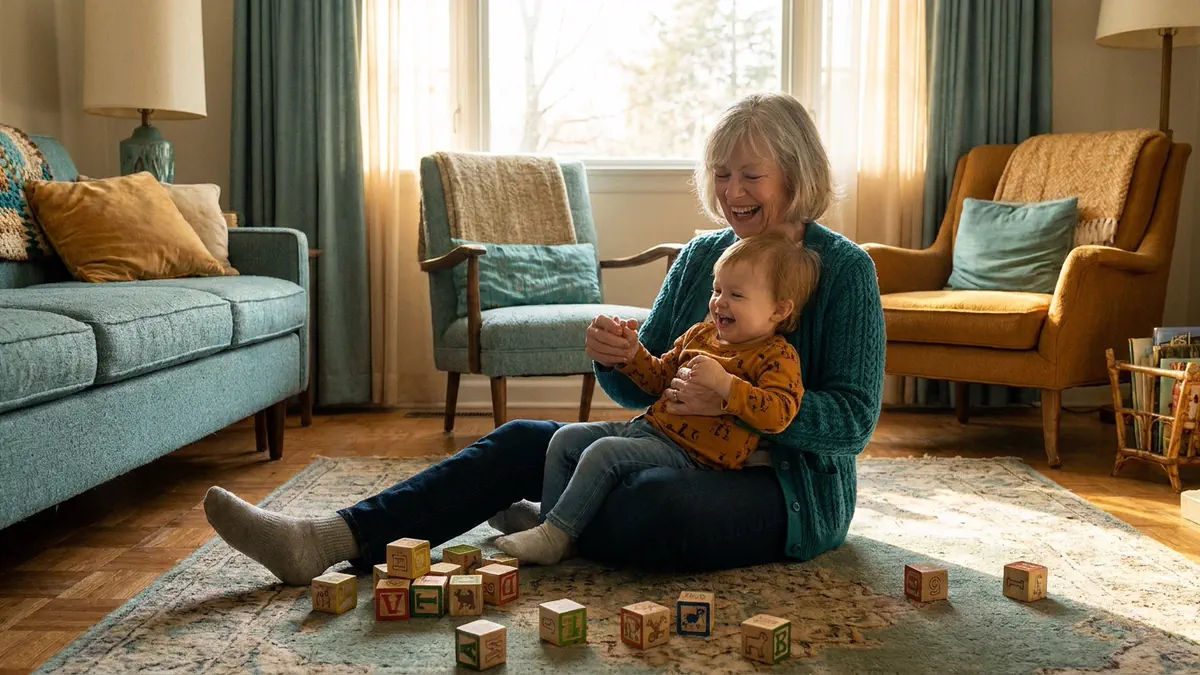
The arms that open and the knees that won’t
Every grandparent knows the moment. The door opens, the small arms go up, and your whole body leans toward them. Then the signal arrives from the knee or the hip, loud and clear, and you do the sideways dance of someone who is about to say no. You pat her head. You sit down. You tell her to climb up beside you instead.
She is fine with that. You are the one who carries the “Sorry, can’t today” through the evening.
What children actually remember
Here is the part worth holding on to. Grandchildren rarely keep a record of who lifted them and who did not. They keep a record of who looked at them, who listened, who made the pancakes and who stayed in the room. To a child, a grandparent on the sofa with a book is a grandparent who is there.
That does not make the missing hug any smaller to you. But it is true, and it is worth saying to yourself on the days the knees win.
Ways to stay in the game with the joints you have
- Take the floor to the child. A low sofa, a firm chair or a beanbag puts you at the child’s level without a hard get-up.
- Be the one who tells the story, sings the song or runs the card game while the little one does the moving.
- Cook together. A child on a stool at the counter and you in a chair is a good afternoon.
- Plant something. A raised bed or a few pots at waist height keeps gardening in reach.
- Plan the big moments for your better hours, and rest before and after.
These are good ideas, and they do their job. They are still a way of working around the problem rather than getting rid of it.
Building a visit around your good hours
Most people with sore joints have a good hour and a bad one. For many, the bad one is the morning, and the good one comes after lunch. So hold the grandkids’ visit for the afternoon, when the knees have warmed up. Put the sofa where you can see the whole room. Keep a cushion at floor level so the youngest can come to you.
It sounds small, but a visit planned around your best hour is a different visit. You are not bracing for the next demand. You are simply there, with the energy to enjoy it.
The window that closes
The thing nobody says out loud is that the window does not stay open. A four-year-old who wants to be carried becomes a nine-year-old who wants to be dropped off at the corner. The years where she asks you to get down on the floor and play do not come back, and you know it. That is why every “not today” stings more than the last.
What to say to the little ones
Children handle honesty better than adults expect. “My knees are tired today, but I want to hear everything about your day” is a sentence a six-year-old understands. It tells her this is not about her, and it tells her you are listening. Then listen, with your whole face. That is the part she will remember.
What the presentation pictures instead
The presentation behind ArtiBrex builds its pitch on exactly this moment. Its picture is specific: a grandparent who gets down to the floor, picks a child up and gets up again on their own. One of the scenes it builds its case on is not a number on a chart. It is a person on the carpet with a three-year-old in their arms.
It says the way there is a different understanding of the cause. In its account, the pain is not simply age but the end of a long chain that begins with a toxin the body cannot clear and a vitamin shortage it cannot fill. The fix it proposes is the Joint Reset, a simple morning ritual in capsule form.
Saying yes at the door
You will know it is working in a very simple way. The door opens, the arms go up, and for once your body leans in and does not stop itself. That is the day the presentation is selling, and wanting it back is only natural. ArtiBrex is what it offers to get you there, with a timeline measured in weeks and the standing reminder that individual results vary.
Frequently asked questions
How can I play with my grandkids when my joints hurt?
Bring the play to your level: a low sofa, a chair at the table or a floor cushion. Stories, cards, baking and low garden beds let you stay close without the hard get-up.
Will my grandchild understand why I say no?
Children are usually quicker than adults to accept it, as long as you tell them warmly that you are there and that it is the knees, not them.
Is it wrong to feel sad about this?
No. Missing the lifting, the chasing and the floor time is part of loving them. It deserves a straight answer, not a brave face.
What does the presentation picture for grandparents?
It pictures kneeling on the floor, picking a grandchild up and getting up again without help. Those are its claims about what its approach is for, and individual results vary.
Keep reading
 Dignity
Feeling Like a Burden: When You Need Your Spouse’s Help
The quiet shame of needing help, what your spouse really feels, and how to protect your dignity and your independence.4 min read Walking
 With Joint Pain: How to Keep Going Without Dread
Why sore joints make people stop walking, how to start smaller than your pride wants, and what you want the walk to feel like.4 min readThis article is general information, not medical advice, and it doesn’t replace a conversation with your doctor or pharmacist. Last updated November 12, 2026. Spotted an error? Write to support@artibrex.blog.